
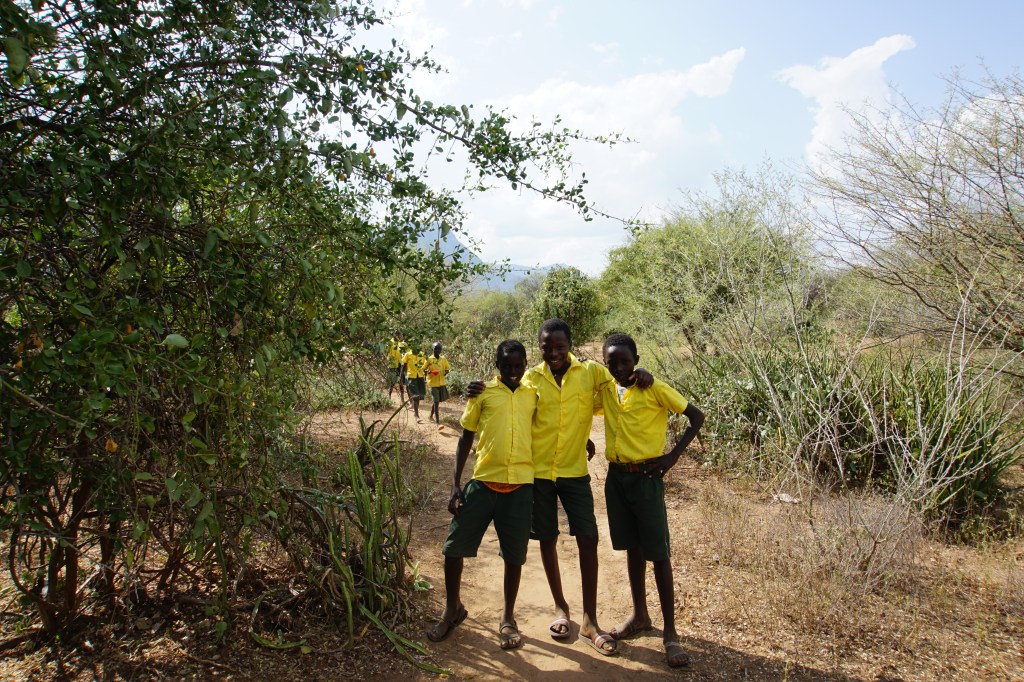
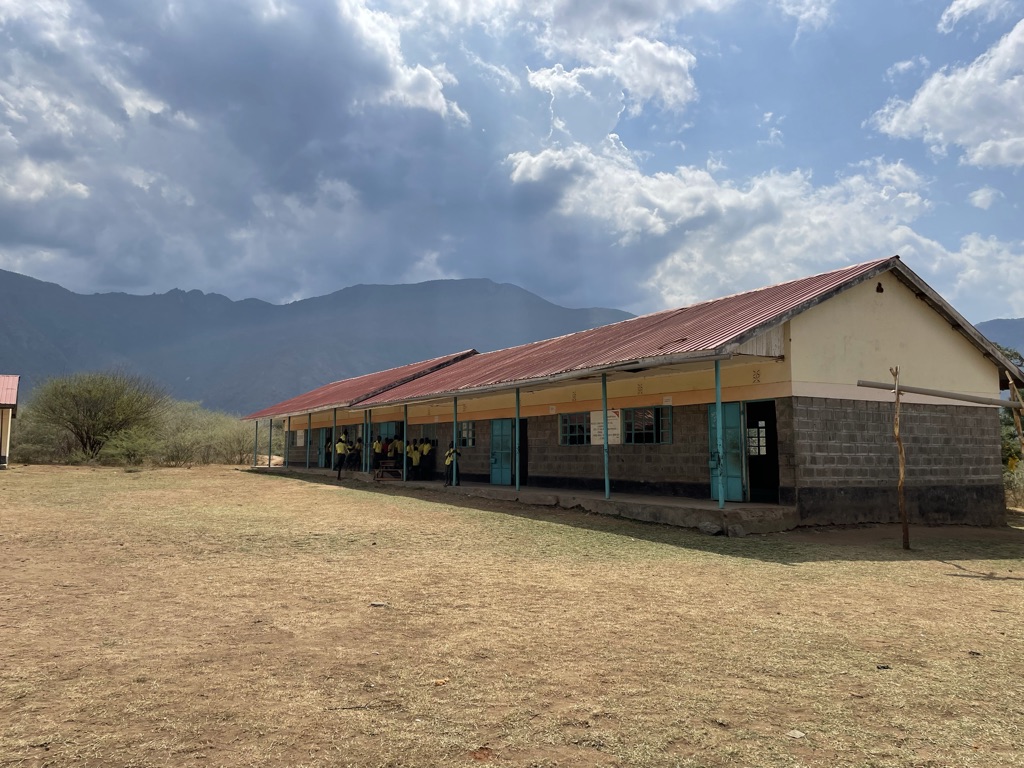
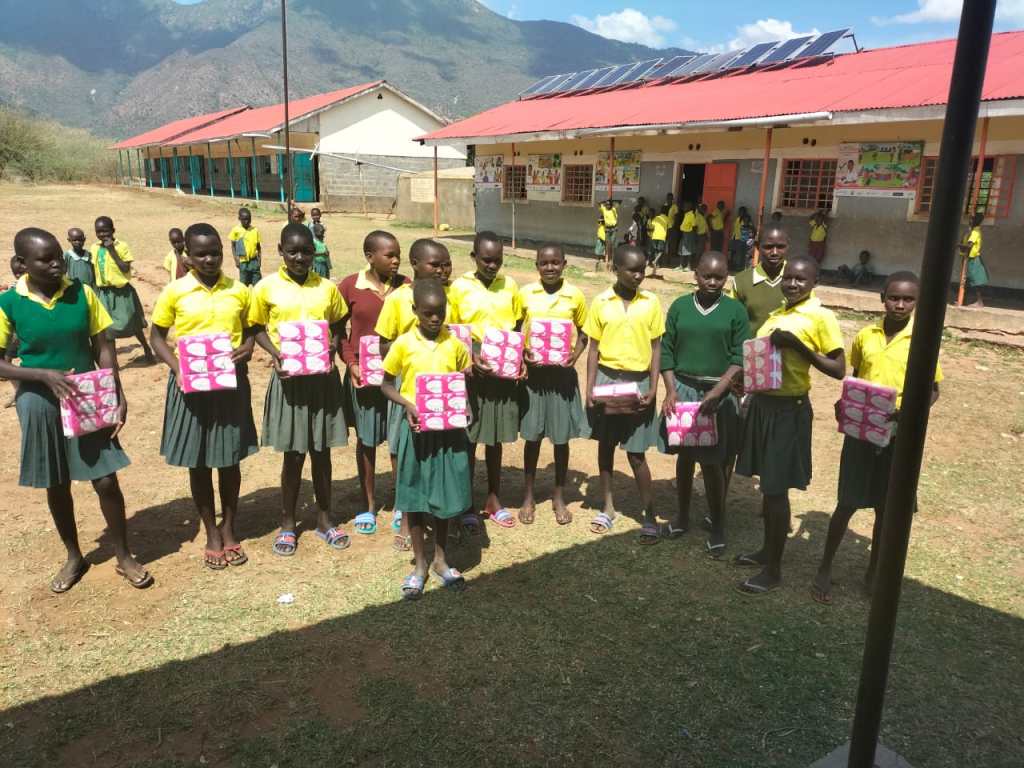
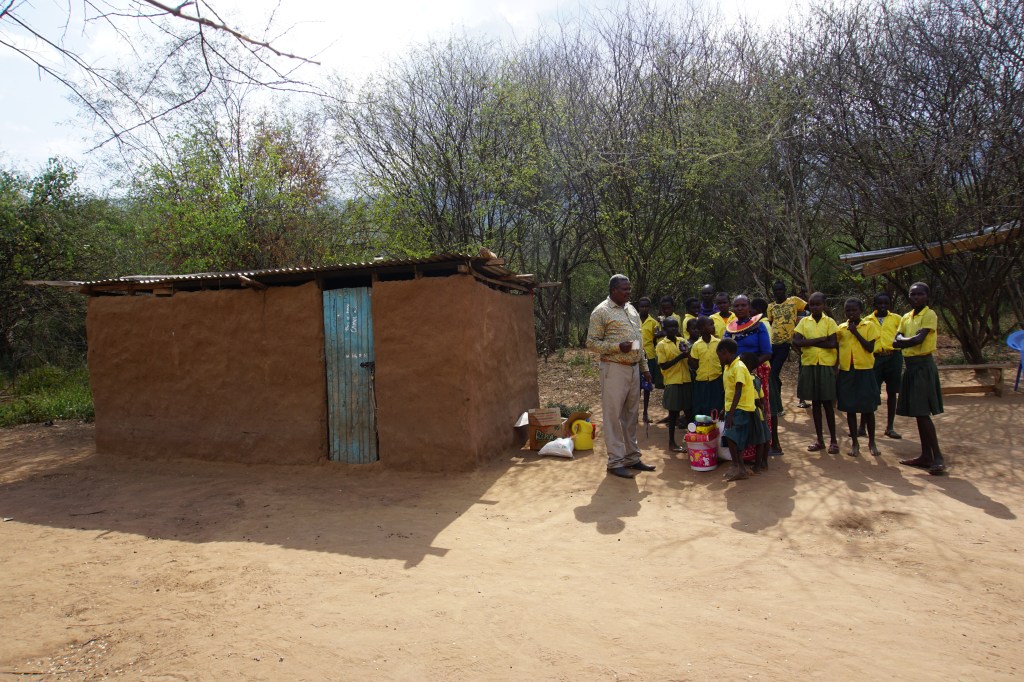
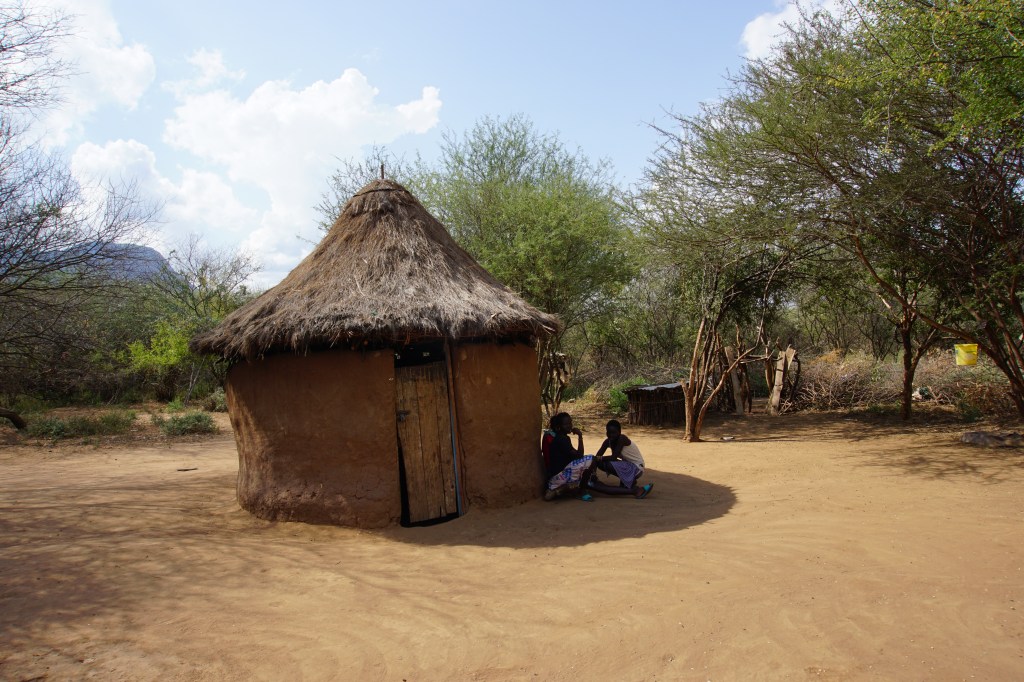
St Philips Poghoi Primary School was founded in 2010, thanks to World Vision Kenya building six classrooms. The research showed this area was amongst those with the highest illiteracy levels as those where FGM and early marriages were still part of the everyday life.
The school now has eight classrooms with the population of 230 pupils – 130 boys and 100 girls, Since 2019 it has been able to do the Kenya Certificate of Primary Education (KCPE) twice with the first mean of 214.89 in the year 2019 and 253.24 in the year 2020.This is a good start compared to the environment.
Given the vastness of the area, children have to walk long distances to and from school each day. Very often families don’t have enough money to send all of their children to school so only one or two will get educated, whilst others help with the family’s livestock (goats) or just stay at home. The school attendance is also dependent on other factors, i.e. the availability of water, the weather, etc. In the dry season the families move in search of food and pastures for their livestock which results in large drop out rate.
Poghoi community is one of those left behind since independence.The illiteracy level stands at 93.6 percent. There had been no school and the culture of early marriages, girl child circumcision and gender based violence is prevalent.
Additionally, poverty level is very high as the main source of income is charcoal burning. This has elicited the culture of early marriages, because a girl is seen as a source of income due to the dowry which needs to be paid to her family.
Find out more about life in West Pokot in our Blog.
 Children First Kenya - We are a registered charity in England (no. 1200726)